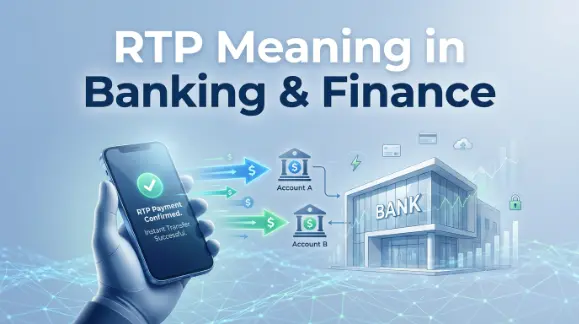
When money needs to move quickly, waiting one or two business days can feel like an eternity. That’s where RTP, or Real-Time Payments, comes into play. Instead of relying on traditional processing schedules, an eligible real-time payment system can move funds between participating Financial Institutions within seconds.
But there’s an important detail that often causes confusion: RTP can describe real-time payments generally, while RTP® Network specifically refers to the instant-payment network operated by The Clearing House in the United States. The U.S. instant-payments landscape also includes FedNow®, which the Federal Reserve operates.
So, what does RTP mean in banking? How does an RTP transfer work? Are there RTP fees or an RTP commission? Which banks support RTP? And what does NOWRTP mean when it appears on a bank statement? This guide answers those questions in plain English while explaining how Real-Time Payments, ACH transfers, RTP credits, and instant Money Transfer services fit together.
What Does RTP Mean in Banking?

In Banking, RTP usually means Real-Time Payments. It describes an electronic payment that can move from a Sender to a Recipient and become available almost immediately when the participating financial institutions and payment rail support the transaction.
Unlike traditional Electronic Payments that may depend on processing windows, an RTP transaction operates through infrastructure designed for continuous availability.
In the United States, the RTP Network from The Clearing House operates around the clock, including weekends and holidays. The network currently supports transactions of up to $10 million per payment.
That makes RTP useful for both consumers and businesses that need funds at a particular moment rather than during the next banking window.
RTP Banking Meaning in Simple Terms
Think of a conventional bank transfer as a package that waits for the next scheduled truck.
An instant payment works more like an express courier that operates continuously. Once the transaction passes the required checks and the receiving institution accepts it, the recipient can access the money much sooner.
The core characteristics of RTP Banking include:
- Near-immediate payment processing
- Availability around the clock on supported rails
- Direct movement between eligible bank accounts
- Immediate or near-immediate funds availability after successful receipt
- Payment status and confirmation information
- Digital payment processing without checks or cash
- Support for both consumer and business transactions
However, “real-time” doesn’t mean every payment will automatically succeed. A bank can reject a transaction because of account restrictions, fraud controls, incorrect information, insufficient funds, eligibility requirements, or other rules.
What Does RTP Mean on a Bank Statement?
When you see RTP on a statement, it generally indicates that the transaction involved a real-time payment.
The exact description depends on the bank. Some institutions may display the sender’s name alongside an RTP-related description, while others use their own transaction terminology.
That’s why the word RTP alone doesn’t necessarily identify the company or person that sent the money. It identifies the payment method or rail associated with the transaction.
What Does RTP Mean in Finance?

In Finance, RTP refers to a broader shift toward faster Payment Processing and immediate movement of funds.
For consumers, that can mean receiving money when they need it. For a Business, it can mean getting paid at the point of sale, funding an account instantly, paying a supplier outside normal banking hours, or sending a time-sensitive disbursement without waiting for the next processing cycle.
This matters because the timing of money has financial value.
A company waiting two days for a payment has less usable cash during those two days. An instant payment can shorten that gap.
RTP Finance Use Cases
Real-time payment infrastructure can support several types of financial activity, including:
- Account-to-account payments
- Consumer money transfers
- Business-to-business payments
- Merchant funding
- Loan disbursements
- Insurance payouts
- Digital-wallet transfers
- Treasury and liquidity management
- Time-sensitive supplier payments
- Certain payroll and earned-wage applications
The Federal Reserve highlights use cases such as account-to-account transfers and bill payment for FedNow, while its more recent industry material points to areas such as auto-loan disbursements and insurance payouts.
The important point is that RTP isn’t simply another way to send money to a friend. It can become part of the infrastructure behind larger Financial Services.
What Are RTP Fees, RTP Commission, and Real-Time Payment Fees?
One of the most common questions is whether an RTP transaction costs money.
The short answer is: it depends on the financial institution or payment provider.
There isn’t one universal consumer-facing RTP commission that every bank charges. A bank may charge nothing to its customer, pass along a fee, include the cost in a business pricing plan, or structure charges differently for commercial customers.
It’s useful to separate three different concepts:
| Cost type | Who may charge it? | What it means |
| Network fee | Payment network | Cost associated with processing payments |
| Bank fee | Bank or credit union | Customer-facing charge for a service |
| Provider fee | Fintech or payment provider | Charge for providing payment functionality |
A bank’s internal cost and the fee you see as a customer aren’t necessarily the same thing.
Does RTP Have a Transaction Fee?
An RTP transaction fee depends on the product and institution involved.
For example, a bank might include instant transfers as part of a consumer account package. Another provider might charge a separate fee. A business using an API or payment service could have an entirely different commercial arrangement.
Therefore, anyone searching for an exact RTP transfer fee should check the current pricing schedule of the bank or payment provider handling the transaction.
Is RTP More Expensive Than ACH?
Pricing varies, but speed can make RTP economically attractive even when a business pays more for an instant transaction.
Imagine a business needs to release a $5,000 payment immediately to prevent a shipment delay. Saving a few dollars on the payment method wouldn’t matter much if a slower transfer caused a costly operational problem.
That’s the central trade-off: payment speed can have value.
Real-Time Payments Participating Banks

Not every bank automatically provides every type of instant payment.
A Participating Bank or other participating Financial Institution connects to an eligible payment infrastructure and enables certain send or receive capabilities for its customers.
In the U.S., two major instant-payment infrastructures are the RTP Network and the FedNow Service.
The Clearing House operates the RTP Network. The Federal Reserve operates FedNow. Both allow participating financial institutions to support real-time payments.
What Are RTP-Enabled Banks?
RTP-enabled banks are financial institutions that can send and/or receive transactions through the RTP Network.
The practical question for a consumer isn’t simply “Does this bank exist on the network?” It’s whether the bank’s customer-facing service actually allows the type of transaction the customer wants to make.
That’s an important distinction.
A financial institution might participate in a payment network without exposing every capability directly through its consumer mobile app.
Banks That Support RTP
The list of banks that support RTP changes as institutions join or modify their services. For that reason, a static list published in an old article can become misleading.
The Clearing House provides information about financial institutions participating in its RTP infrastructure. The Federal Reserve also maintains a current participant resource for FedNow, with its participant list updated regularly.
The Federal Reserve’s participant page currently lists participating financial institutions and service providers, with the institution data updated as of August 31, 2026.
How to Check if Your Bank Supports RTP
You can usually check in three places:
- Your bank’s online banking or mobile app.
- The bank’s official instant-payment information page.
- Customer support or the bank’s current fee and transfer documentation.
Look for terms such as:
- Real-Time Payments
- RTP
- Instant Payments
- Instant Transfer
- FedNow
- Real-Time Transfer
Don’t assume that a bank supporting one instant-payment rail automatically supports another.
Real-Time Payments vs ACH: What’s the Difference?

The RTP vs ACH comparison matters because both systems can move money electronically, yet they work differently.
ACH stands for Automated Clearing House. It remains a major part of the U.S. Payment System and supports common transactions such as direct deposits, recurring bills, payroll, and account transfers.
Real-time payments focus on speed and continuous availability.
RTP vs ACH Comparison
| Feature | Real-Time Payments | ACH |
| Processing model | Real-time | Batch-oriented |
| Typical speed | Seconds when successfully processed | Usually longer |
| Availability | 24/7/365 on supported rails | Operates through established processing schedules |
| Funds availability | Immediate when successfully received | Depends on ACH processing and account availability |
| Common use | Urgent payments and instant disbursements | Payroll, bills, recurring transfers |
| Confirmation | Real-time payment messaging can provide confirmation | Processing follows ACH workflows |
| Best advantage | Speed | Broad established usage |
The biggest difference isn’t simply that one is “new” and the other is “old.”
It’s the way each system handles the payment.
An ACH transfer generally moves through batch processing and established settlement schedules. An instant-payment network is designed to process eligible payments continuously.
ACH Transfer vs RTP Transfer
Suppose a customer needs to move $2,000 to another eligible account on Saturday evening.
An RTP transfer can be useful because the infrastructure operates continuously.
An ACH transfer may follow a different processing schedule depending on the type of transaction and the financial institutions involved.
That doesn’t make ACH inferior. It makes ACH suitable for a different set of jobs.
ACH remains particularly useful for high-volume recurring transactions where immediate settlement isn’t necessary.
Real-Time Payments vs Traditional Payments
Traditional payment methods can involve waiting periods because banks need time to process, clear, and settle transactions.
With real-time payments, those stages operate within an infrastructure designed for much faster processing.
The result is a different customer experience: money can move when the customer initiates the payment rather than waiting for the next conventional processing window.
What Is Real-Time Payment Credit?
A real-time payment credit is an incoming payment that credits the recipient’s eligible Bank Account through a real-time payment system.
The word “credit” here doesn’t mean a credit card.
It means money has been credited to the recipient’s account.
For example, imagine a lender approves a loan and sends the proceeds through an eligible instant-payment service. When the receiving institution accepts and posts the transaction, the customer’s account receives a real-time credit transfer.
RTP Credit Transfer vs ACH Credit
Both RTP and ACH can create a credit to someone’s account.
The difference comes from the payment infrastructure and processing method.
An ACH credit might be used for:
- Payroll
- Government payments
- Recurring deposits
- Business payments
- Account funding
An RTP credit transfer is better suited to situations where the recipient needs access to funds quickly.
The distinction is especially valuable for businesses. A company can send a payment and receive confirmation without relying on a conventional multi-day settlement window.
Examples of Real-Time Payment Credit
Common potential applications include:
- Loan proceeds
- Insurance payouts
- Merchant funding
- Digital-wallet cash-outs
- Business disbursements
- Person-to-person transfers
- Time-sensitive account funding
The specific availability depends on the financial institutions and services involved.
How Does Real-Time Payment Work?
Understanding how RTP works becomes much easier when you follow one transaction from beginning to end.
Step 1: The Sender Initiates the Payment
The Sender, or Payer, starts the transaction through a bank, payment provider, business platform, or other supported service.
The sender provides the information needed to identify the Recipient or Payee and authorize the payment.
Depending on the service, that can include an account number, routing number, amount, recipient information, and other payment data.
Step 2: The Sending Bank Validates the Transaction
The sending Bank or Financial Institution checks the payment according to its own rules and the requirements of the payment service.
These checks can include:
- Account status
- Available funds
- Transaction limits
- Authentication
- Fraud controls
- Recipient information
- Regulatory and compliance checks
A payment can fail at this stage if it doesn’t meet the required conditions.
Step 3: The Payment Travels Through the Payment Rail
The institution sends the payment through the appropriate Payment Network.
For a transaction using the RTP Network, the payment travels through The Clearing House’s RTP infrastructure.
For a FedNow transaction, the payment travels through the Federal Reserve’s FedNow infrastructure.
This is why “RTP” and “FedNow” shouldn’t be treated as identical names.
They represent different infrastructures that support the broader U.S. instant-payments ecosystem.
Step 4: The Receiving Bank Processes the Payment
The Recipient’s financial institution receives the payment message and processes the transaction.
If the payment passes the institution’s checks, the recipient’s account can be credited.
The Federal Reserve describes FedNow as an infrastructure that allows participating banks and credit unions to send and receive transactions within seconds on behalf of customers.
Step 5: Funds Become Available
Once the payment succeeds and the receiving institution credits the account, the recipient can access the funds according to that institution’s account terms.
This immediate availability is one of the defining advantages of instant payments.
Step 6: Payment Confirmation Occurs
A successful transaction can provide confirmation that helps both parties understand what happened.
For a business, that information can also help with reconciliation.
Instead of checking whether a payment has finally cleared tomorrow, the business can work with transaction information much closer to the moment the payment occurs.
Simple Real-Time Payment Flow
Sender / Payer
↓
Sending Bank
↓
Real-Time Payment Network
↓
Receiving Bank
↓
Recipient / Payee
↓
Funds Available + Payment Confirmation
What Happens Behind the Scenes?
Modern real-time payment infrastructure relies on much more than moving dollars from one account to another.
It involves:
- Payment messaging
- Financial-institution connectivity
- Authentication
- Fraud controls
- Transaction validation
- Clearing
- Settlement
- Account posting
- Status messaging
- Reconciliation data
Both the RTP Network and FedNow use the ISO 20022 messaging standard, which supports structured and richer payment information.
That additional information can help businesses automate reconciliation and improve payment visibility.
What Does NOWRTP Mean on a Bank Statement?
NOWRTP is a term that can appear in an incoming bank transaction description.
It’s particularly important for people who see a transaction they don’t immediately recognize and search for “NowRTP money transfer” or “NOWRTP banking.”
In at least some banks, NOWRTP is used as a statement descriptor for an incoming instant payment.
For example, Dime Commercial Bank explains that incoming instant payments may appear on its statements as “NOWRTP From” followed by the sender’s name. The same bank says FedNow-related receipts can appear as “NOWFED From.”
That tells you something important:
NOWRTP isn’t necessarily the name of the company that sent your money.
It can be part of the transaction description used to identify the instant-payment method.
What Is a NOWRTP Payment?
A NOWRTP payment may represent an incoming real-time payment that a bank labels using its own statement format.
The exact appearance depends on the financial institution.
A transaction might contain:
- NOWRTP
- Sender name
- Transaction amount
- Date
- Additional bank-specific information
Therefore, don’t identify the sender based solely on the word NOWRTP.
Is NOWRTP a Money Transfer Company?
Not necessarily.
The phrase NowRTP money transfer can make it sound like NOWRTP is a standalone transfer company. However, a statement descriptor can simply indicate that the transaction arrived through an instant-payment channel.
The actual sender could be a person, business, financial institution, payment provider, or another organization.
Is a NOWRTP Transfer a Scam?
The label itself doesn’t prove that a transaction is fraudulent.
If you see an unexpected NOWRTP transfer, investigate it like any other unfamiliar bank transaction.
Check:
- The transaction amount.
- The date and time.
- The sender description.
- Recent payments you expected.
- Recent transfers from another account.
- Any refunds, payouts, or disbursements you were expecting.
If you still don’t recognize the payment, contact your bank through its official support channel.
Don’t send the money back to a stranger simply because someone contacts you and claims they made a mistake. Let the bank investigate the transaction and provide the appropriate instructions.
NOWRTP vs NOWFED
The terms can refer to different instant-payment infrastructures when a bank uses these statement labels.
NOWRTP may indicate an RTP-related incoming payment.
NOWFED may indicate a FedNow-related incoming payment.
Dime Commercial Bank explicitly documents both descriptors for incoming instant payments.
However, statement descriptions aren’t standardized consumer branding across every bank. Your institution may use different wording.
RTP vs FedNow: Are They the Same?
No.
This distinction deserves attention because many articles incorrectly treat the two terms as interchangeable.
The RTP Network is operated by The Clearing House.
The FedNow Service is operated by the Federal Reserve.
Both support instant payments through participating financial institutions, but they’re separate payment infrastructures.
RTP Network
The RTP Network is a U.S. instant-payment network operated by The Clearing House.
It has operated since 2017 and now supports transaction values of up to $10 million. The Clearing House reports that the network has processed more than 1.7 billion transactions and cleared and settled more than $3.2 trillion since its launch.
FedNow Service
The Federal Reserve launched FedNow on July 20, 2023.
It allows participating financial institutions to provide instant-payment services around the clock, every day of the year.
The Federal Reserve’s participant resources are updated regularly. Its current participant page lists financial institutions that are live on the service along with service providers and other participating organizations.
RTP vs FedNow Comparison
| Feature | RTP Network | FedNow Service |
| Operator | The Clearing House | Federal Reserve |
| Purpose | U.S. instant payments | U.S. instant payments |
| Availability | 24/7/365 | 24/7/365 |
| Participants | Participating financial institutions | Participating financial institutions |
| Maximum customer payment | Up to $10 million | Current service limit is lower |
| Messaging standard | ISO 20022 | ISO 20022 |
| Consumer access | Through participating institutions | Through participating institutions |
The Federal Reserve’s current FedNow product information lists a $500,000 maximum credit-transfer value limit, while participants can establish their own lower limits.
The RTP Network increased its transaction limit from $1 million to $10 million on February 9, 2025.
What Can Real-Time Payments Be Used For?
The strongest use cases share one characteristic: timing matters.
Person-to-Person Money Transfer
Consumers can use supported instant-payment services for eligible account-to-account transfers.
The advantage is straightforward. If someone needs money immediately, waiting for a conventional transfer may not make sense.
Business-to-Business Payments
Businesses can use instant payments to settle invoices, make supplier payments, manage liquidity, and handle urgent financial obligations.
For a company, faster movement can reduce the time between sending money and completing a financial obligation.
Merchant Funding
Merchants often care deeply about settlement speed.
An instant-payment system can help eligible businesses receive funds faster, improving cash-flow management and potentially reducing reliance on short-term financing.
Loan Disbursements
Loan providers can use instant payments to deliver funds quickly after approval.
The Federal Reserve has specifically highlighted auto-loan disbursements as an area where FedNow can help financial institutions send funds instantly, including outside conventional business hours.
Insurance Payments
Insurance payouts can also benefit when an approved claim requires timely movement of funds.
The Federal Reserve identifies property and casualty insurance payouts as another potential instant-payment use case.
Digital Wallet Transfers
Digital wallets and payment platforms can use instant payment infrastructure to move funds between supported accounts.
This can create a faster alternative to traditional cash-out processes where the underlying service supports it.
Benefits of Real-Time Payments
The biggest benefit isn’t simply that RTP sounds fast. Speed changes what people and businesses can do with their money.
Faster Access to Funds
The recipient doesn’t have to wait for a conventional processing cycle when the payment succeeds through a supported instant-payment system.
Better Cash-Flow Management
Businesses can receive and deploy funds sooner.
That can matter when a company needs to pay suppliers, cover expenses, purchase inventory, or manage short-term liquidity.
24/7 Availability
Both major U.S. instant-payment infrastructures operate around the clock.
The Federal Reserve describes FedNow as available 24 hours a day, seven days a week, while The Clearing House describes the RTP Network as operating 24/7/365.
Faster Payment Confirmation
A business can gain quicker visibility into payment status.
That can reduce uncertainty and make reconciliation easier.
Richer Payment Information
ISO 20022 messaging supports structured payment information that can improve transaction processing and reconciliation.
For businesses handling large volumes of Financial Transactions, that information can be just as valuable as speed.
Limitations and Risks of RTP
Fast payments solve one problem, but they don’t eliminate every payment problem.
Instant Payments Can Be Hard to Undo
When money moves quickly, there’s less time to catch an error before the transaction completes.
That’s why you should carefully verify the recipient before approving an RTP transfer.
A wrong account number or mistaken recipient can create a difficult recovery situation.
Fraud Remains a Serious Concern
Scammers can exploit the speed of instant payments.
Common tactics include:
- Fake invoices
- Impersonation
- Urgent payment requests
- Account takeover
- Social engineering
- Fake customer-support messages
The safest habit is simple: verify before you send.
Not Every Bank Supports Every Service
A sender may have access to instant payments while a recipient’s institution doesn’t support the relevant rail.
That’s why RTP payment availability depends on the institutions and services involved.
Limits Can Vary
Payment limits don’t necessarily match the maximum limit of the network.
For example, the RTP Network supports transactions up to $10 million, but a particular bank or service may impose a lower customer-level limit.
The same principle applies to FedNow. The Federal Reserve’s service-level limit is different from the limits an individual participating institution may establish.
RTP Bank Transfer Requirements
The exact RTP bank transfer requirements vary by institution, but a successful transaction generally requires an eligible account and sufficient information to identify the recipient.
Depending on the service, you may need:
- Recipient name
- Routing number
- Account number
- Payment amount
- Valid eligible account
- Authentication or authorization
- Sufficient available funds
- Compliance with the bank’s transfer limits
For example, Dime Commercial Bank says recipients of its instant payments need to provide the sender with the routing and account numbers for the account receiving the payment.
Your own bank may use different procedures.
RTP vs ACH vs FedNow vs Wire Transfer
When choosing a Payment Method, speed isn’t the only consideration.
| Feature | RTP | ACH | FedNow | Wire Transfer |
| Primary role | Instant payments | Electronic batch payments | Instant payments | Fast/high-value transfers |
| Availability | 24/7/365 | Scheduled processing | 24/7/365 | Depends on wire service and bank |
| Typical speed | Seconds | Usually longer | Seconds | Often same-day |
| Maximum network amount | $10 million | Depends on ACH rules | $500,000 service limit | Depends on bank/network |
| Common use | Time-sensitive payments | Payroll, bills, recurring payments | Time-sensitive payments | Large or specialized payments |
| Payment infrastructure | The Clearing House | ACH operators | Federal Reserve | Wire networks |
| Best feature | Immediate movement | Established broad usage | Federal Reserve instant rail | High-value transfer capability |
No single system wins every category.
ACH remains extremely useful for recurring and scheduled transactions. RTP and FedNow are valuable when timing is critical. Wire transfers remain important for certain high-value and specialized transactions.
Frequently Asked Questions About RTP
What does RTP stand for in banking?
RTP generally stands for Real-Time Payments. In the United States, RTP can also specifically refer to the RTP Network, an instant-payment network operated by The Clearing House.
What does RTP mean in finance?
In Finance, RTP refers to infrastructure that allows eligible payments to move between participating financial institutions in real time or near real time. Businesses can use it for disbursements, merchant funding, supplier payments, liquidity management, and other time-sensitive transactions.
Is RTP the same as ACH?
No. RTP vs ACH is essentially a comparison between instant-payment infrastructure and a batch-oriented electronic payment system. ACH remains widely used for payroll, bills, recurring transfers, and other scheduled transactions.
How fast is an RTP transfer?
An eligible RTP transaction can process within seconds once the sending and receiving institutions accept and process it. The exact customer experience depends on the institutions and service involved.
Is RTP available 24/7?
Yes, the U.S. RTP Network operates around the clock, including weekends and holidays. FedNow also operates 24/7/365.
Do all banks support RTP?
No. Customers need access through a participating financial institution or service that supports the relevant instant-payment functionality.
Does RTP cost money?
It can, but there isn’t one universal RTP commission or consumer fee. Banks, credit unions, fintechs, and payment providers set their own pricing.
What is an RTP credit?
An RTP credit is money credited to a recipient’s account through a real-time payment transaction. It isn’t the same thing as a credit card transaction or a loan.
What does NOWRTP mean?
NOWRTP can appear as a bank statement descriptor for an incoming RTP-related instant payment. Dime Commercial Bank, for example, says its incoming instant-payment receipts can appear as “NOWRTP From” followed by the sender’s name.
Is NOWRTP a company?
Not necessarily. In some banking environments, NOWRTP is a transaction descriptor associated with an instant payment rather than the name of the sender or a standalone money-transfer company.
What is the difference between RTP and FedNow?
The RTP Network is operated by The Clearing House, while FedNow is operated by the Federal Reserve. Both provide infrastructure for instant payments through participating financial institutions.
Can an RTP payment be reversed?
Don’t assume that a completed instant payment can simply be canceled like an unfinished transaction. Because the funds can move quickly, verify the recipient and amount before sending. If you make an error, contact your financial institution immediately and follow its recovery process.
Final Takeaway:
The simplest definition of RTP meaning in banking is this: RTP refers to Real-Time Payments that allow eligible electronic payments to move between participating financial institutions quickly, often within seconds. But the terminology has several layers.
RTP can describe the broader concept of real-time payments. RTP Network specifically identifies The Clearing House’s U.S. instant-payment network. FedNow represents a separate Federal Reserve instant-payment infrastructure.